US-Iran Airstrike Escalation Deepens Conflict on July 9, 2026
Escalation of US‑Iran Airstrikes
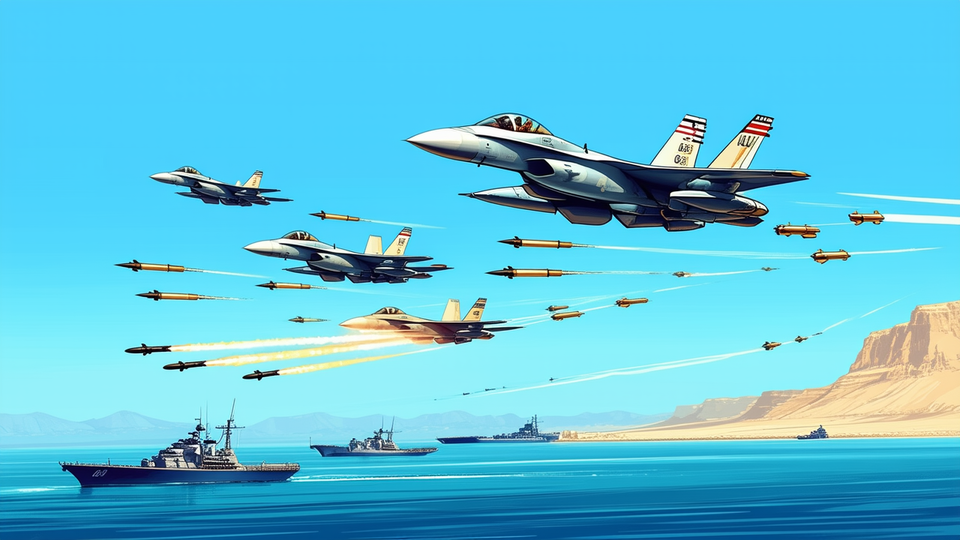
In the early hours of July 9, 2026 a new wave of airstrikes reshaped the tense frontier between the United States and Iran. The United States announced that its forces had struck approximately ninety Iranian targets along the southern coast. The strikes focused on air‑defence systems, coastal surveillance assets, missile and drone storage sites, as well as naval facilities and logistics infrastructure. U.S. officials framed the campaign as a measure to protect the freedom of navigation in the Strait of Hormuz, a chokepoint through which a fifth of the world’s oil and gas flows before the war began.
Iran’s response was swift and strategic. The Islamic Revolutionary Guard Corps said it had launched missiles and drones at U.S. military installations in Bahrain and Kuwait, describing the attacks as retaliation for the American bombardment. Sirens were reported in Bahrain, Kuwait and Jordan, and Iranian air defenses reported engagements over the port cities of Bandar Abbas, Bushehr, Sirik, Konarak, Chabahar, and others. The Iranian side also claimed to have struck U.S. bases in the Gulf states, highlighting the growing reach of its retaliatory capabilities.
The renewed conflict has immediate humanitarian and economic implications. Iranian health officials reported fourteen deaths and seventy‑eight injuries across five provinces as a result of the U.S. strikes. Meanwhile, the United States cited its role in facilitating the transit of more than eight hundred commercial vessels and three hundred eighty million barrels of crude oil since early May, underscoring the strategic importance of keeping the strait open. Nevertheless, oil markets reacted sharply, with Brent crude climbing over five percent as concerns about supply disruptions grew.
Political leaders on both sides have delivered stark warnings. President Donald Trump declared the cease‑fire “over,” posting on his platform that further Iranian attacks on shipping would make the situation “much worse.” Iranian Parliament Speaker Mohammad Bagher Qalibaf countered, stating, “If you strike, you’ll get hit.” The death of Supreme Leader Ayatollah Ali Khamenei earlier in the week, followed by his burial at a shrine in Mashhad, added a profound symbolic dimension to the hostilities and amplified calls for retaliation within Iran.
Regional allies and mediators have urged restraint. Qatar, a host to the largest U.S. base in the region, condemned attacks on commercial shipping but called for a return to diplomacy. Turkey and Oman’s foreign ministers emphasized the need to avoid further escalation and revive negotiations. Yet the cycle of strikes and counter‑strikes suggests that diplomatic channels remain under severe strain.
As the conflict persists, the world watches a fragile balance between military pressure and diplomatic outreach. The United States maintains that its limited targeting aims to degrade Iran’s capacity to threaten navigation, while Iran frames its retaliation as a sovereign right to protect national interests in the Gulf. The outcome will hinge on whether both parties can navigate the immediate security concerns while re‑engaging in substantive negotiations to prevent a broader regional war.