Trump Announces Plan to End Syria’s Terrorist Sponsor Designation
Trump’s Move to End Syria’s Terrorist Sponsor Status
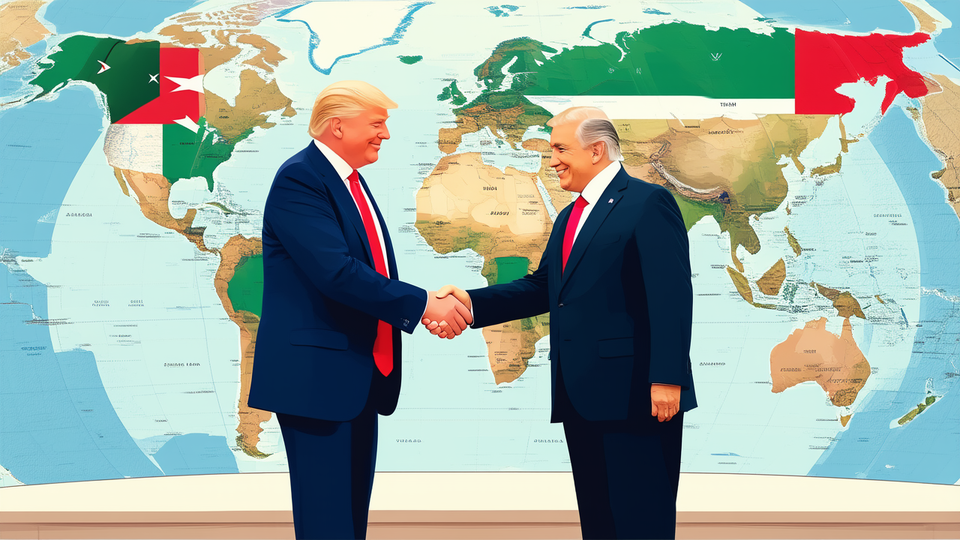
On July 9, 2026, President Donald Trump addressed the United States Congress to announce his intention to remove Syria from the list of state sponsors of terrorism. Standing beside Syria’s interim president, Ahmed al‑Sharaa, at the NATO summit in Ankara, Trump affirmed, “I think I will, yeah,” signaling a decisive policy shift after nearly five decades.
Secretary of State Marco Rubio quickly followed up, confirming that the administration had submitted its request to Congress. He emphasized that lifting the designation would “unlock international trade and investment, give Syria a chance to rebuild, and open up a new chapter for the Syrian people.” Rubio also noted formal assurances from al‑Sharaa that Syria would not support future terrorist acts.
The designation, originally applied in 1979, had long stifled Syria’s financial connectivity. U.S. financial institutions were barred from conducting business with Syrian entities, and the status blocked foreign aid and private sector investment. Lawmakers from both parties had recently urged the administration to act, citing that the designation was the “most significant remaining legal impediment to Syria’s reconstruction.”
Trump’s announcement builds on a series of earlier steps. In June of the previous year, the president signed an executive order lifting most U.S. sanctions against Syria, citing “positive actions taken by the new Syrian government.” That order directed a review of the state‑sponsor label and set the stage for today’s request. In November, the United Nations Security Council passed a resolution supporting the removal of sanctions, and the U.S. State Department removed al‑Sharaa from the Specially Designated Global Terrorist list.
Al‑Sharaa, a former leader of the rebel group Hay’at Tahrir al‑Sham, has a controversial past tied to an organization once affiliated with al‑Qaeda. Human‑rights groups have accused his former faction of abuses. Despite this history, the Syrian interim government has positioned itself as a partner in reconstruction, and the U.S. administration cites “positive changes and counter‑terrorism actions” as justification for the policy shift.
Congress now has a 45‑day window to review the decision before it becomes final. If any objections arise, they could delay or block the removal. Supporters in Congress, including Senators Jeanne Shaheen, Elizabeth Warren, and Representative Joe Wilson, argue that the change will encourage billions of dollars in pledged aid and private investment. Critics remain cautious, stressing the need for continued monitoring of Syria’s commitments to cease supporting terrorist activities.
Should the designation be lifted, Syria could re‑enter the global banking system, attract foreign investors, and rebuild critical infrastructure damaged by a nearly 14‑year civil war. The move also aligns with broader U.S. strategic interests in stabilizing the Middle East and reducing the influence of rival powers.
In summary, President Trump’s intent to rescind Syria’s state‑sponsor status marks a significant diplomatic development. It reflects a coordinated effort across the executive branch, Congress, and international partners to transition Syria from isolation toward economic recovery and regional stability.