Progressive Squad Poised for Bigger Role in the New Congress
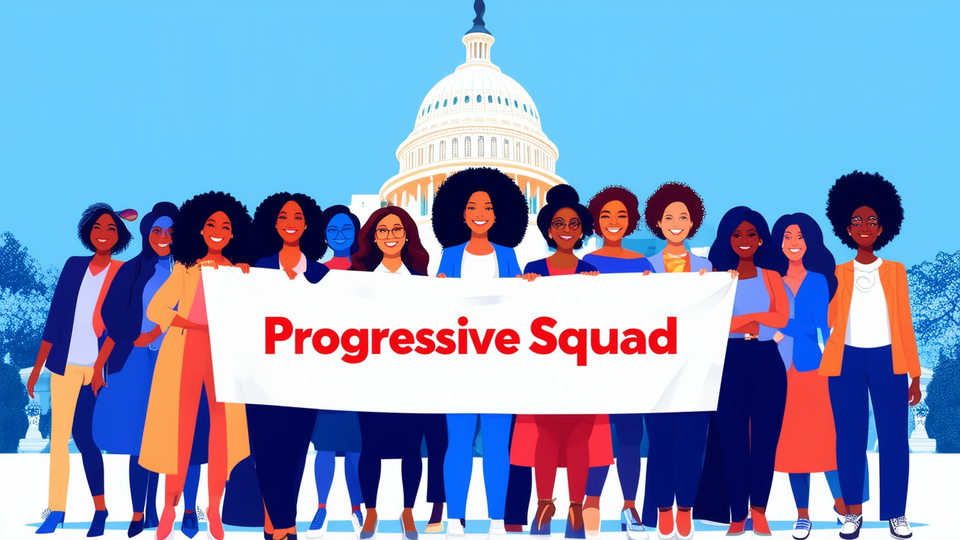
Progressive Squad Gains Momentum
The 2026 primary cycle has delivered a wave of victories for progressive candidates across the nation. Building on the original 2018 "Squad" of Alexandria Ocasio‑Cortez, Rashida Tlaib, Ilhan Omar and Ayanna Pressley, newer members such as Melat Kiros, Darializa Avila Chevalier and Claire Valdez have secured nominations, expanding the progressive footprint in key Democratic districts.
Counting endorsements from the Justice Democrats—a group that backed the original squad—provides a clear proxy for measuring this growth. So far, nine candidates have earned the group’s endorsement in the 2024 election, and an additional nine primary winners are projected to join the House in 2026. This brings the potential core to at least eighteen members, with room for a few more as remaining primaries wrap up.
The significance of this expansion lies not only in numbers but also in timing. Election forecasts suggest a relatively slim Democratic majority of roughly 229‑206 seats after the midterms. In a chamber where only 218 votes are needed for control, a bloc of eighteen to twenty‑four progressive representatives could become a decisive voting coalition, influencing leadership contests and legislative agendas.
Analysts compare the emerging progressive bloc to past intra‑party factions, such as the post‑Tea Party Freedom Caucus that reshaped Republican strategy. Progressive leaders may leverage their heightened numbers to negotiate concessions from House Speaker Hakeem Jeffries, or in a more confrontational scenario, to block his speakership entirely. The group’s internal dynamics will determine whether they act as a unified caucus or as a collection of individual reformers.
Policy priorities for the enlarged squad are expected to reflect the platform that propelled them to victory: bold climate action, Medicare for All, tax reforms targeting the wealthiest, and campaigns to limit corporate super‑PAC influence. Even with a Democratic president from the opposite party, the squad can shape the national conversation, promote investigations, and force high‑profile votes that signal voter demand for progressive change.
As the new Congress convenes, the progressive bloc’s influence will hinge on its ability to balance ideological ambition with pragmatic coalition‑building. Their growing presence promises to keep progressive ideas at the forefront of legislative debate, potentially reshaping the Democratic agenda for years to come.