Mexico Probes Alleged FBI Role in El Mayo Arrest – A Diplomatic Flashpoint
Introduction
Mexico has opened a formal inquiry into claims that the United States, and specifically the Federal Bureau of Investigation, participated in the capture of notorious drug cartel leader Ismael “El Mayo” Zambada García. The investigation focuses on whether U.S. officials misled Mexican authorities about the extent of American involvement, an issue that threatens the principle of sovereign respect between the two neighboring nations.
Key Allegations
Media outlet Pie de Nota reported that the FBI was present during Zambada García’s arrest, contradicting the U.S. government’s long‑standing denial. Mexican Attorney General Ernestina Godoy warned that, if the reports are verified, they point to violations of both Mexican and international law, an unlawful pact, and a deliberate falsehood from a U.S. diplomat. President Claudia Sheinbaum echoed these concerns, stating that any breach of Mexican sovereignty would be a serious transgression.
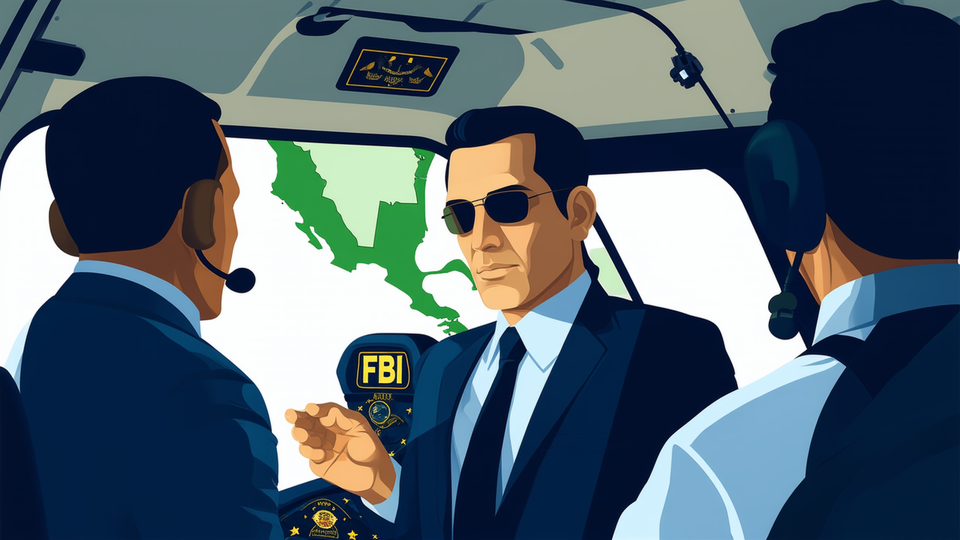
The arrest itself occurred in July 2024 when Zambada García was persuaded by fellow trafficker Joaquín Guzmán López to board a small aircraft in Mexico that landed at an El Paso airport in Texas. U.S. authorities seized both fugitives at the border. While the Mexican government has repeatedly sought clarification, former U.S. Ambassador Ken Salazar insisted that the United States had no role, emphasizing that “the plane, the pilot, and the operation were not ours.” However, a plaque beside the aircraft now displayed at a New Mexico museum credits two FBI agents with a “highly complex, secretive and daring arrest.”
Diplomatic Implications
These revelations have amplified already tense diplomatic relations. Past incidents, such as the 2024 CIA‑linked raid on a drug laboratory in northern Mexico, have fueled Mexican suspicions of covert U.S. operations. The alleged FBI presence adds a new layer of controversy, prompting Mexico to attempt an inspection of the aircraft in August 2024—efforts that were blocked by American officials, who also allegedly supplied false identification data for the plane.
Beyond the specific case, the situation underscores broader concerns about transparency, respect for national borders, and the potential for diplomatic fallout when intelligence agencies operate across sovereign lines without clear coordination.
Conclusion
As Mexico’s inquiry proceeds, the international community watches to see whether the United States will acknowledge any role or continue to maintain its denial. The outcome will shape future cooperation on transnational crime, set precedents for cross‑border law enforcement, and test the resilience of a partnership that has long balanced mutual security interests with respect for each nation’s autonomy.